
See the Stars
Since ancient times, our ancestors have observed and recorded the sky for purposes such as navigation, agricultural planning and religion. Without complicated instruments to observe the universe, they relied on the naked eye to map out the movement of stars in the night sky.
Celestial bodies, such as the moon and stars, were frequently associated with religion and gods. They were thought to be perfect, with smooth surfaces and circular orbits. It was also thought that the Earth was the centre of the universe.
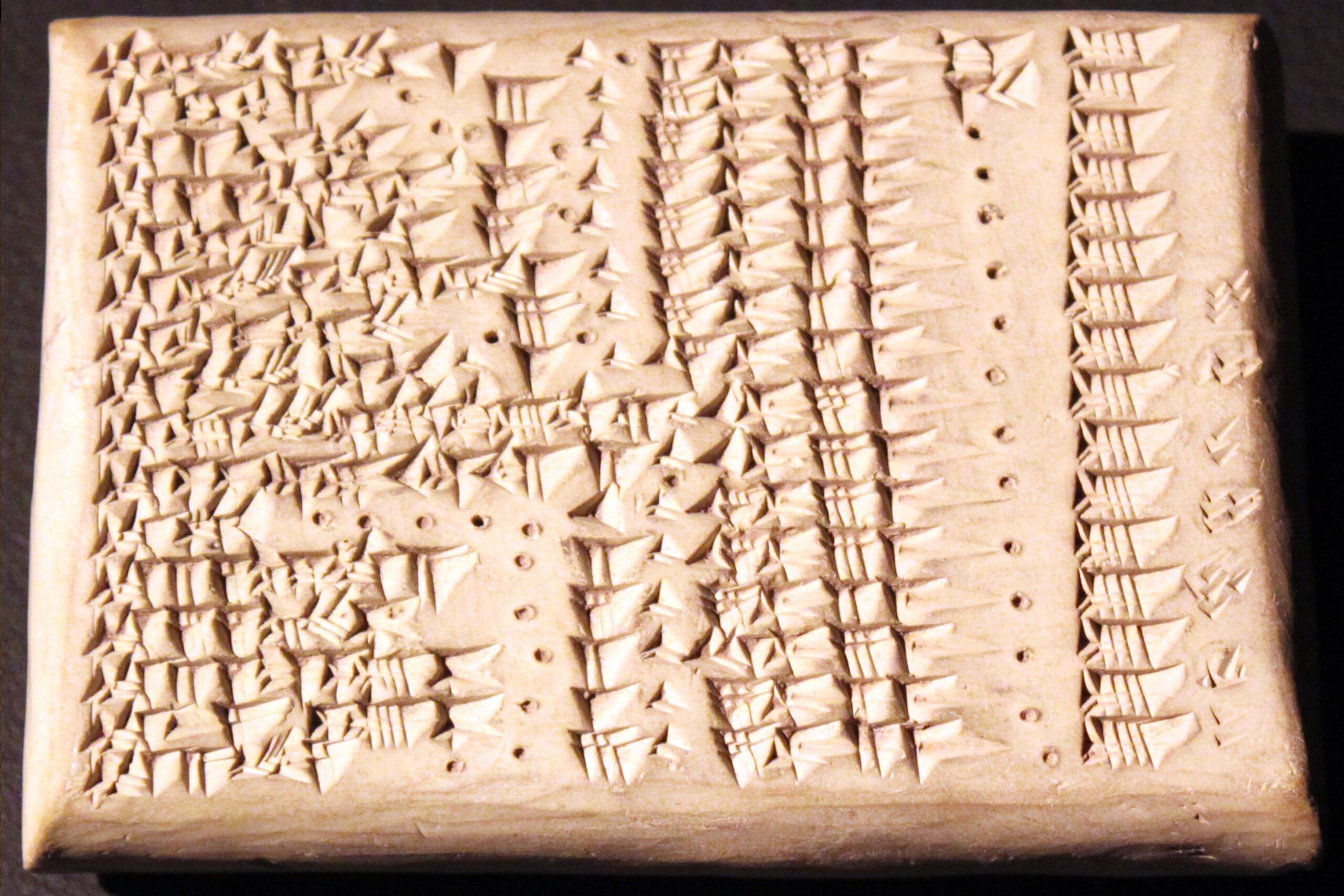
The Babylonians were among the first to record and track the movement of stars. The Babylonian Star List was found in Uruk, or modern-day Iraq. It was written in Cuneiform script on a clay tablet. It dates back to 320-150 BC and lists the names and the number of stars in each constellation. (Wikimedia Commons)

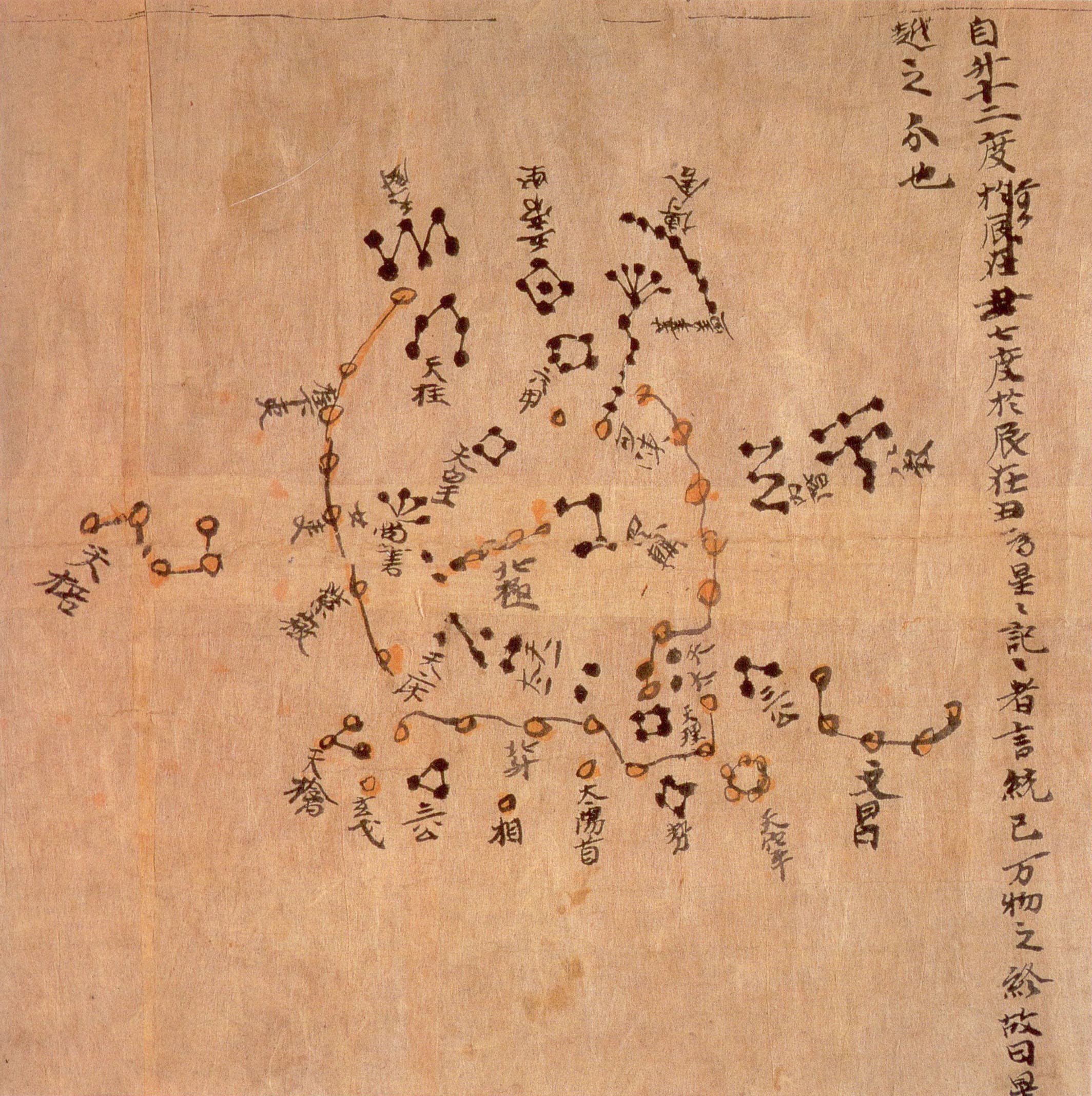
The Dunhuang Star Map is one of the first known star maps from ancient Chinese astronomy. Created in 700 CE, it was discovered in 1900 in the Mogao Caves of China. It represents the schools of thought of three Chinese astronomers: Shih Shen, Kan Te, and Wu Hsien. (Wikimedia Commons)

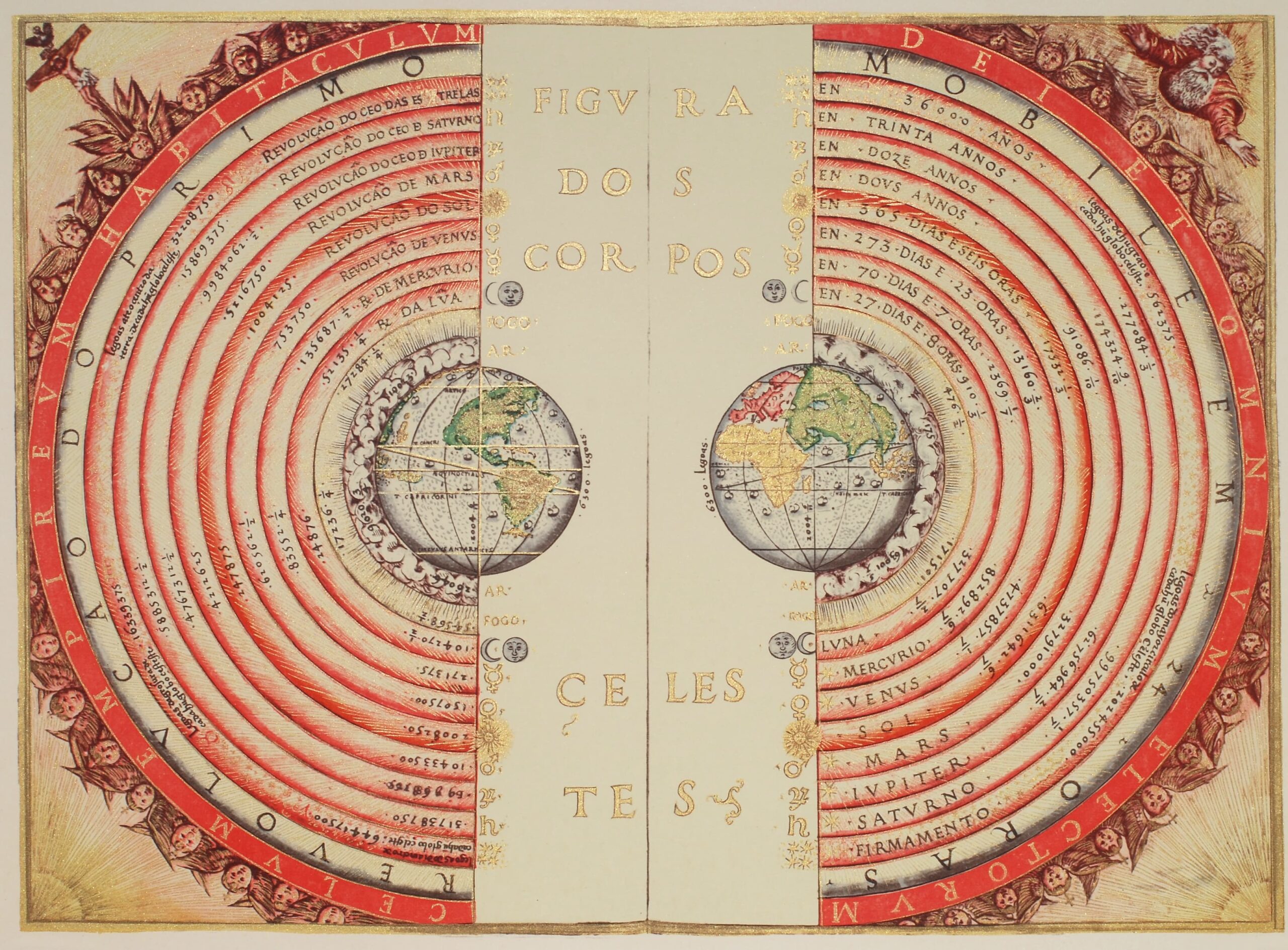
In ancient times, people believed that the Earth was the centre of the universe, and that the Sun and the other planets made their orbits around us. This 1568 illustration by Bartolomeu Velho depicts the model of the universe as theorised by famed 2nd-century Roman astronomer, Claudius Ptolemy. (Wikimedia Commons)

Shake It Up: Transforming Our Worldview
The Scientific Revolution occurred over the 16th and 17th centuries, and many inventions and discoveries in this period changed our understanding of the cosmos.
One important innovation during this time was the telescope. Viewing space through the telescope furthered our knowledge of the Solar System and led to the collapse of the ancient idea of a “perfect universe”. In other words, we discovered that the Sun and all other planets did not revolve around the Earth.
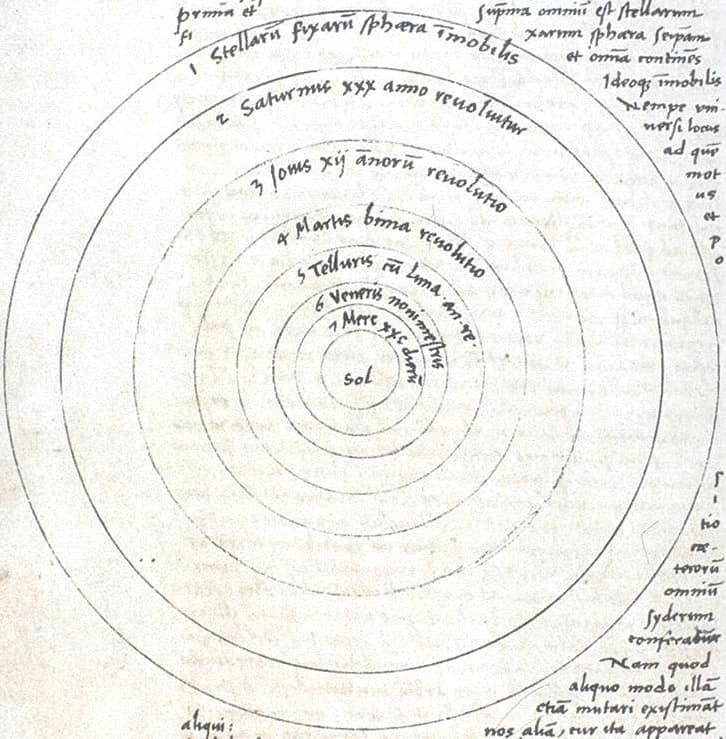
Polymath Nicolaus Copernicus, a pioneer in the Scientific Revolution, concluded that the Earth revolved around the Sun. His theory was published in 1543 in his book On the Revolutions of the Heavenly Spheres, which this image depicts. Astronomers who supported this theory faced harsh criticism for going against the belief that the Earth was the centre of the universe. (Wikimedia Commons)

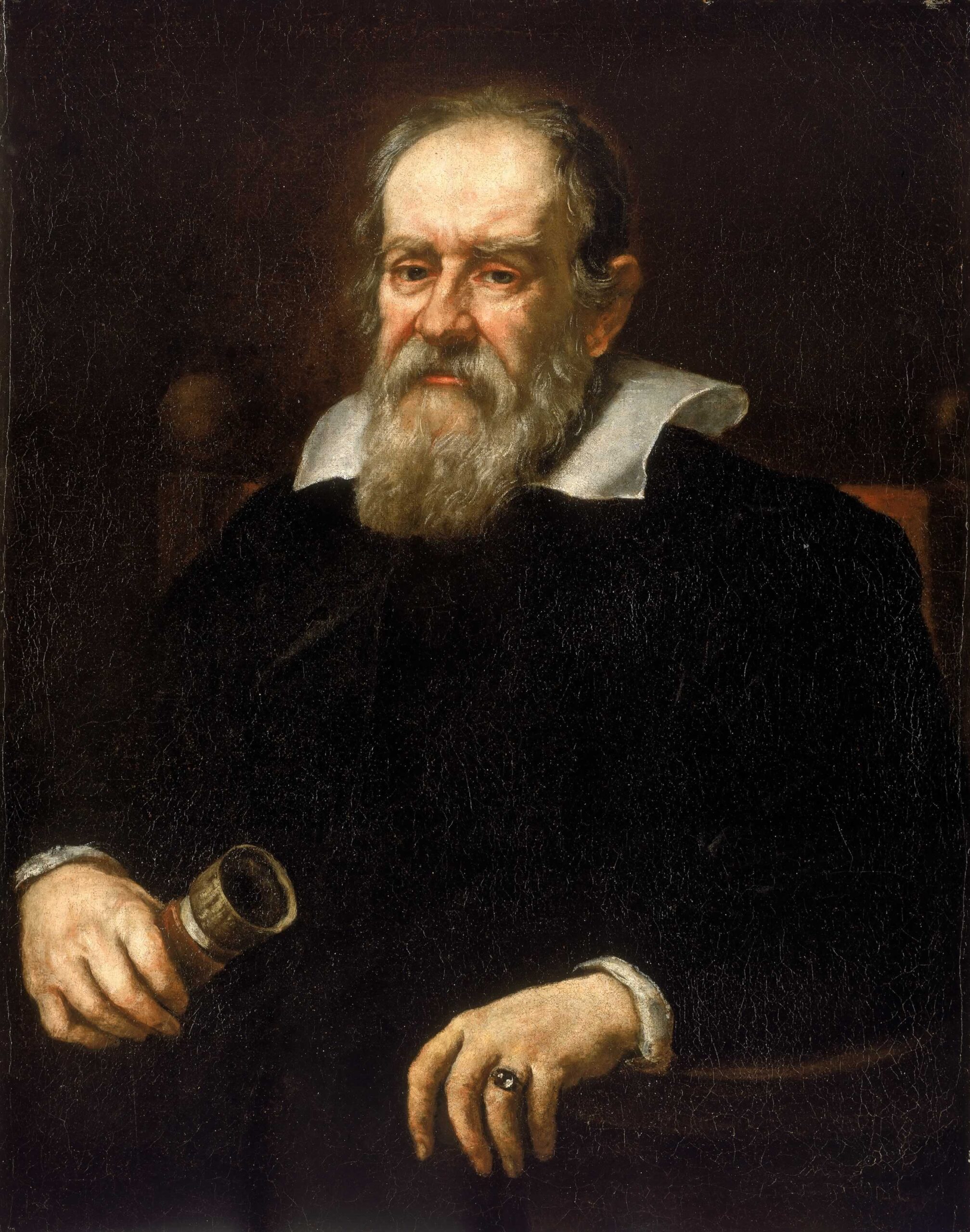
Galileo Galilei was one of the first to use the telescope to study the sky. Through the telescope, he saw moons orbiting Jupiter and observed the phases of Venus. These became important evidence to prove Copernicus’s theory that planets orbit around the Sun. (Wikimedia Commons)

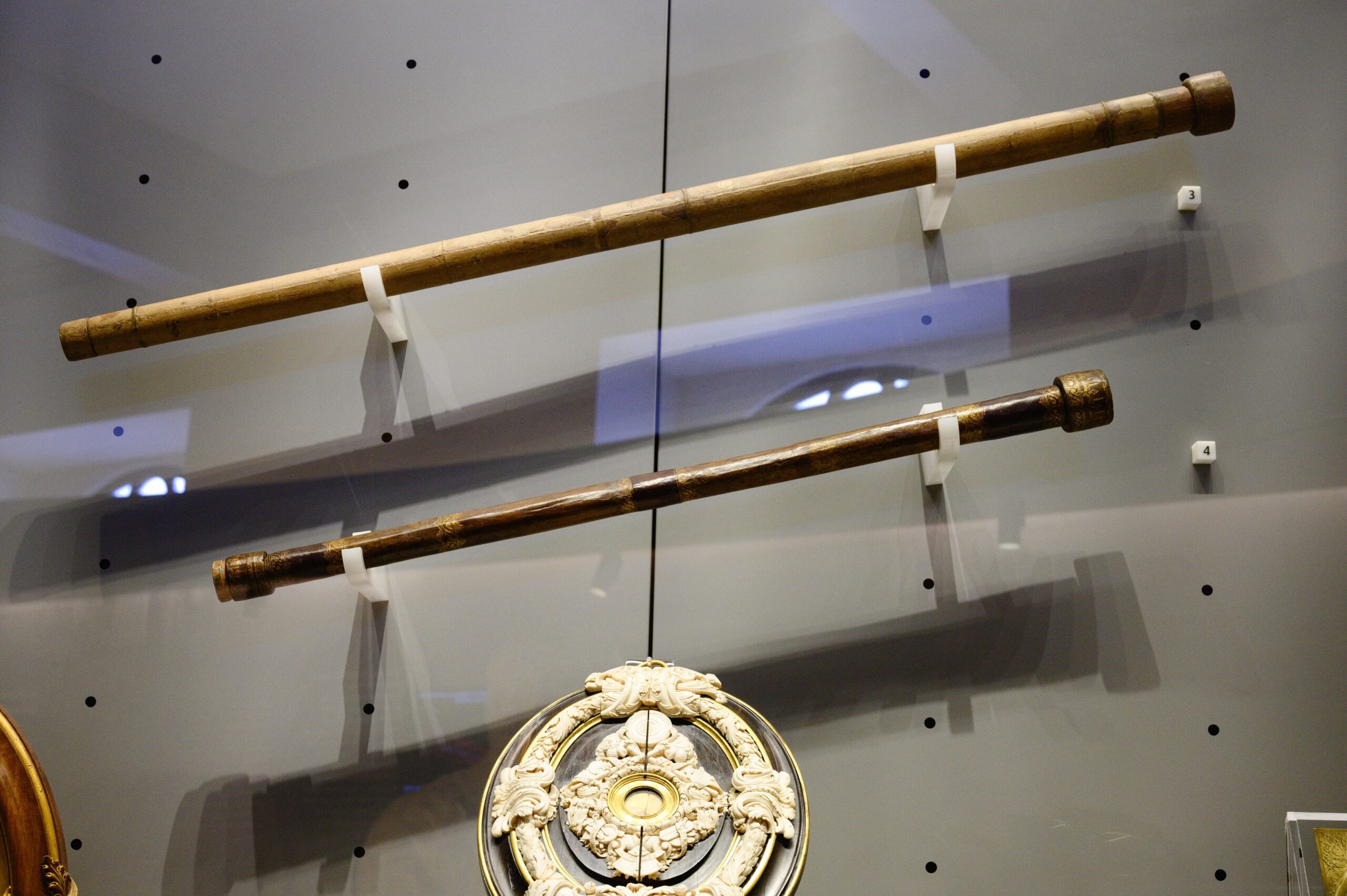
These were the very telescopes that Galileo built and used to observe celestial bodies in the sky. They are currently displayed at the Museo Galileo in Florence, Italy. Both are made of wood, paper, copper and leather. The smaller telescope was made in 1609; the larger one was crafted in 1610. (Wikimedia Commons)

The Far Universe Has Never Been So Close
As we moved into the 20th century, scientists and astronomers began to look more closely at what lay beyond our solar system and the Milky Way galaxy. Technological advancements meant that modern telescopes were a lot more powerful and could see far into the universe.
During this time, we found that the universe was expanding. By observing the radio frequencies of galaxies transmitted to Earth and calculating their distances and speeds, astronomers proved that these galaxies were moving further away.
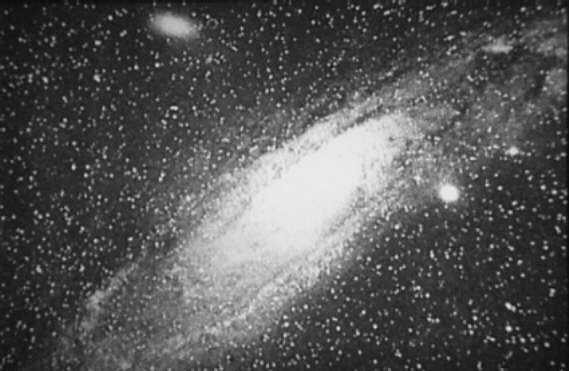
We could soon take photos of our universe by using reflecting telescopes. These reflect light onto photographic plates, capturing images. This photograph of the Andromeda, the nearest galaxy to ours, was taken in 1899 by Isaac Roberts, who was one of the first to dabble in astrophotography. (Wikimedia Commons)

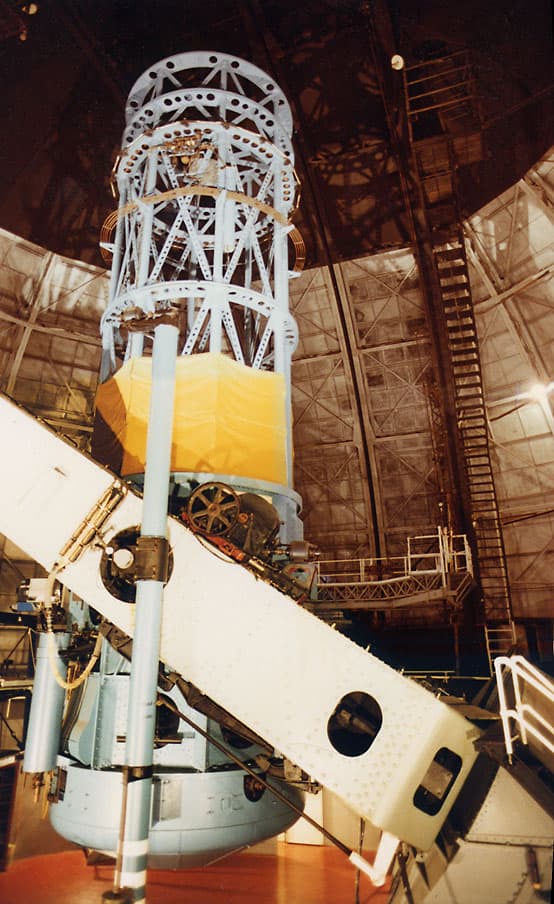
The 100-inch Hooker telescope in Los Angeles, California was completed in 1917. At the time, it was the largest optical telescope. Through it, Edwin Hubble observed the M31 star in the Andromeda galaxy. The star was proof that there were stars in other galaxies besides our own. (Wikimedia Commons)

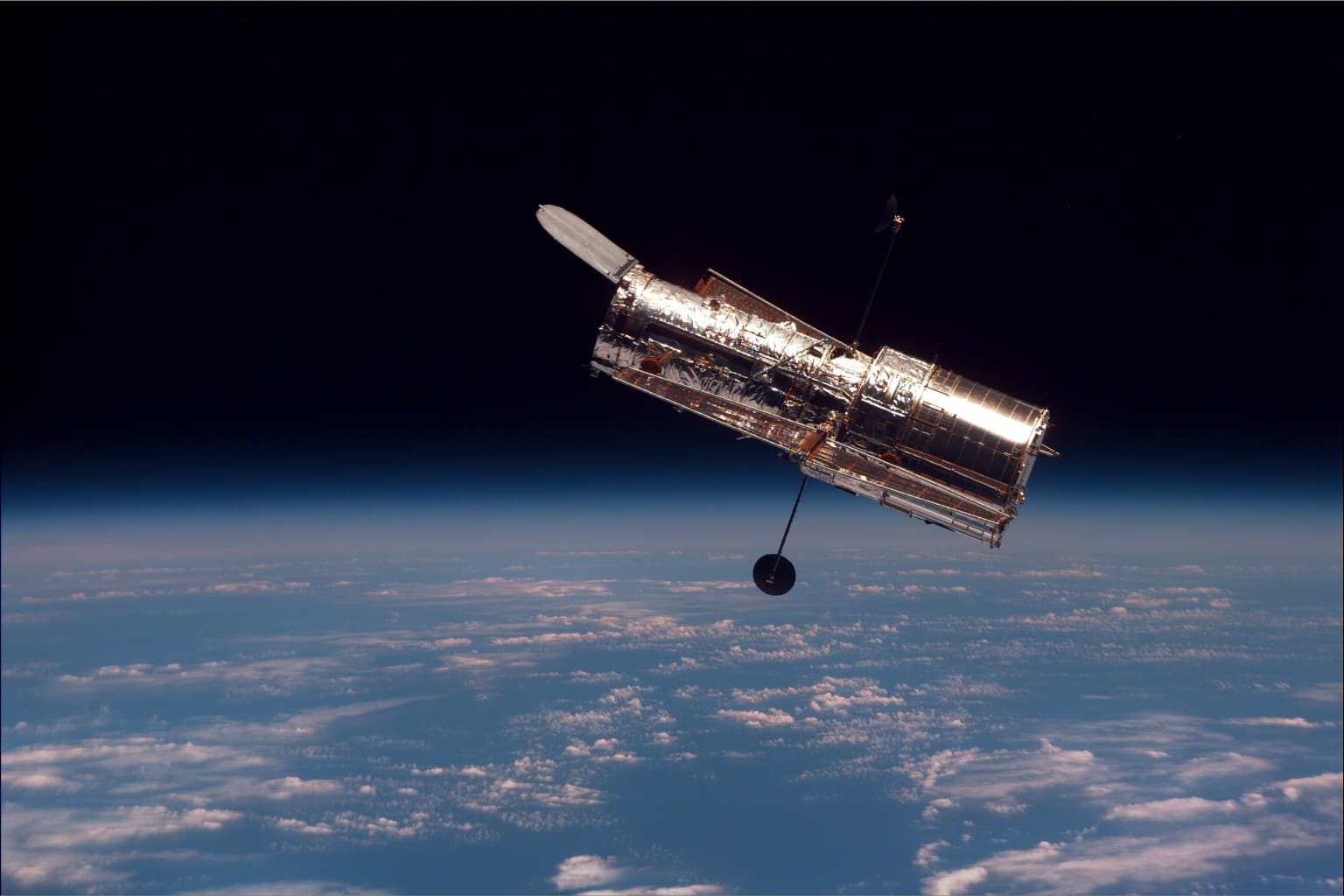
In 1990, the Hubble Space Telescope was launched to orbit around Earth. It is the first optical observatory to be stationed in outer space. This allows it to receive images of much better quality than telescopes on Earth. (Wikimedia Commons)

To Infinity and Beyond
Today, we have sent astronauts to the moon and explorer vehicles to other planets. This has led to the discovery of microorganisms and frozen lakes of liquid water on other celestial bodies.
Astronomy has thus reached vast new heights, bringing the universe ever closer to humankind. Though the universe remains largely unexplored, it presents exciting new discoveries just waiting to wow us at every turn.
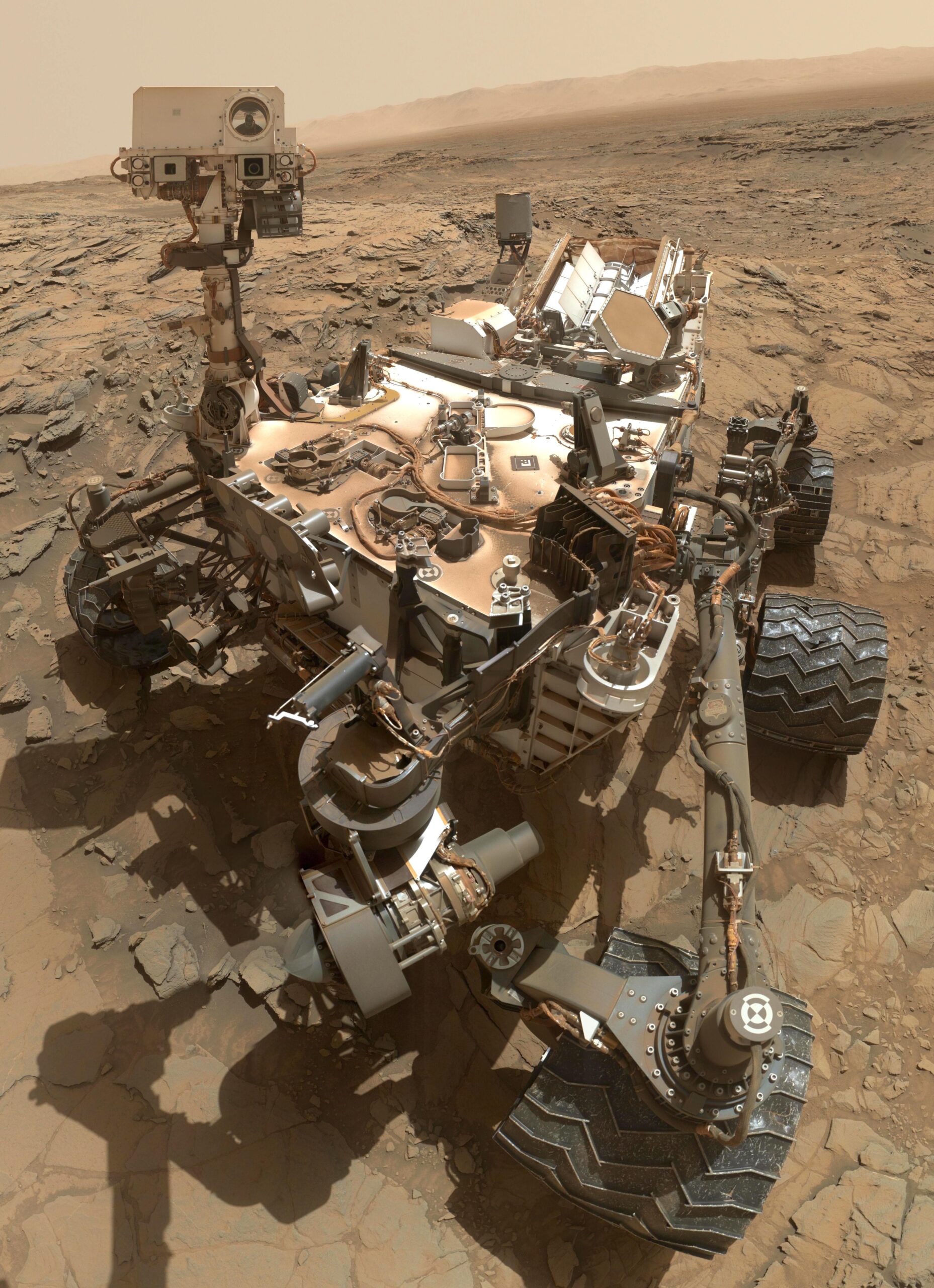
This is a 2015 selfie from NASA’s Curiosity Mars rover, taken on Mars. Curiosity is one of many robotic vehicles released on Mars by NASA, and is the largest and most capable rover to date. The pictures that it took proved that there was once water on Mars. (Wikimedia Commons)

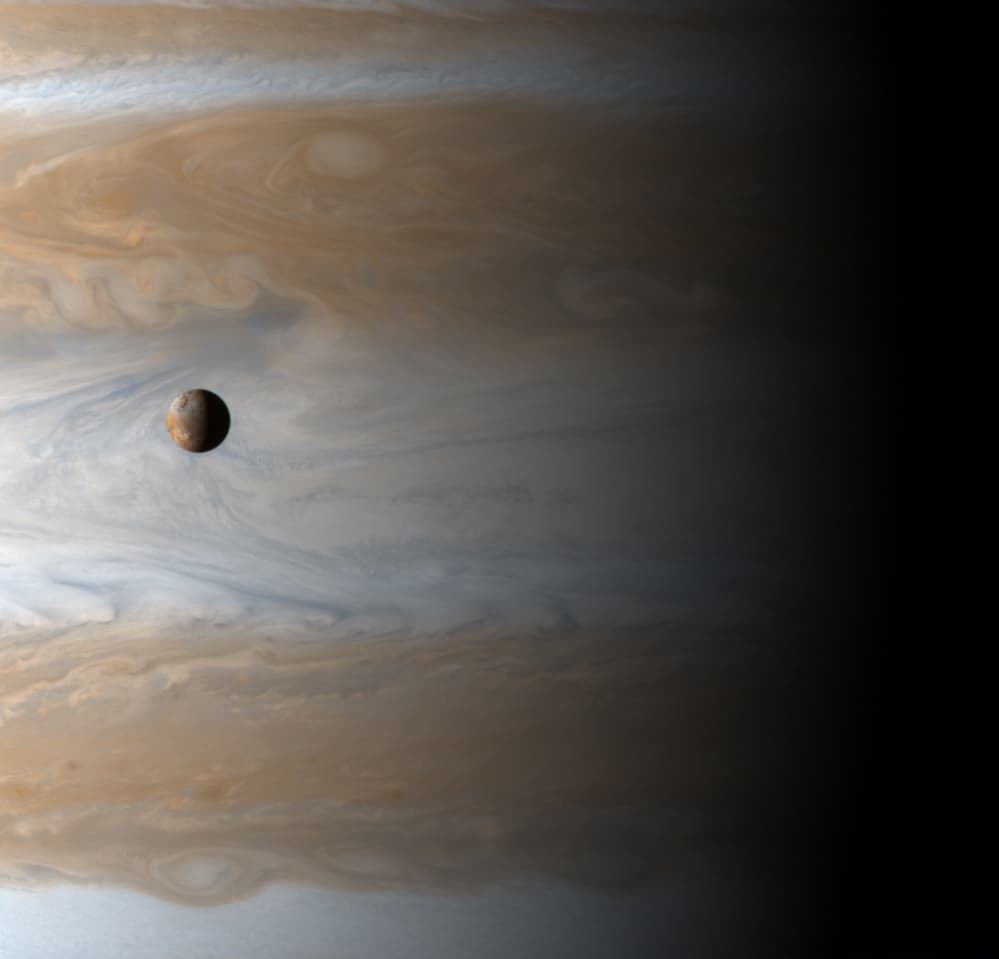
This is a fly-by picture that the Cassini-Huygens probe took in 2001, showing Io orbiting Jupiter. In 2004, the space probe entered Saturn’s orbit and released Huygens, which landed on Titan in 2005. This marked the first landing on a celestial object further than Mars. (Wikimedia Commons)

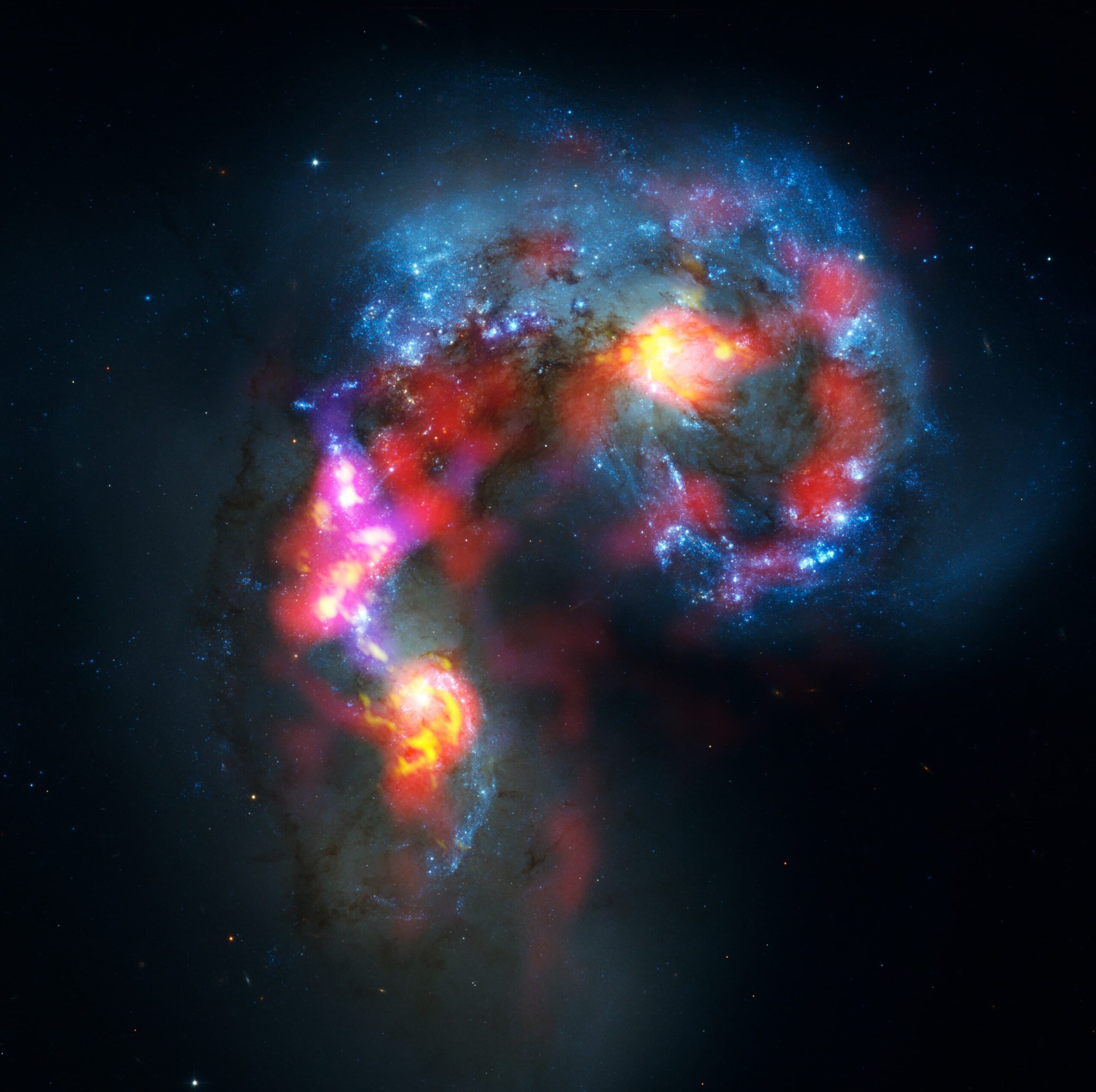
A collaboration between the Hubble Space Telescope and the Atacama Large Millimeter Array (ALMA), a series of 66 radio telescopes, produced this observation image in 2011. It shows the Antennae Galaxies, a pair of colliding spiral galaxies about 70 million light-years away. The high resolution of this picture shows just how far technology has come where astronomy is concerned. (Wikimedia Commons)
